学生公开信比赛优胜者—The Great Subscription Trap

这封信的作者是the Kent School in Conn.17 岁的Michael Shin,她是学生公开信大赛的前 10 名获胜者之一,我们收到了 9,946 份参赛作品。


Dear Subscription Services Users,

By the time you read this letter, it might be locked behind a $5 monthly paywall. But let’s face it — you’ll probably pay for it anyway.

My crusade against the subscription apocalypse started with an HP printer demanding $1.50 monthly for ink cartridges. (Yes, my printer now has a protection racket.) Now, car companies want monthly fees for heated seats and automatic garage doors. Welcome to 2025, where keeping your posterior warm costs $20 a month. What’s next — a subscription to use your refrigerator’s ice maker? A monthly fee to unlock your microwave’s popcorn button?

The subscription tsunami is already here. In 2020, more American households had Amazon Prime than owned pets or decorated Christmas trees. From movies to news articles, monthly memberships have colonized the internet faster than cat videos. Between 2018 and 2021, average subscription spending per U.S. consumer surged from $237 to $273. This trend shows no signs of slowing down, as companies realize they can slice and dice their services into bite-sized monthly payments.

Sure, subscription services once seemed like economic heroes. Streaming services swooped in like caped crusaders, fighting internet piracy and delivering thousands of shows through one platform. Companies got steady revenue streams, and we got entertainment buffets. But like any all-you-can-eat buffet, we’re now paying for far more than we actually consume.

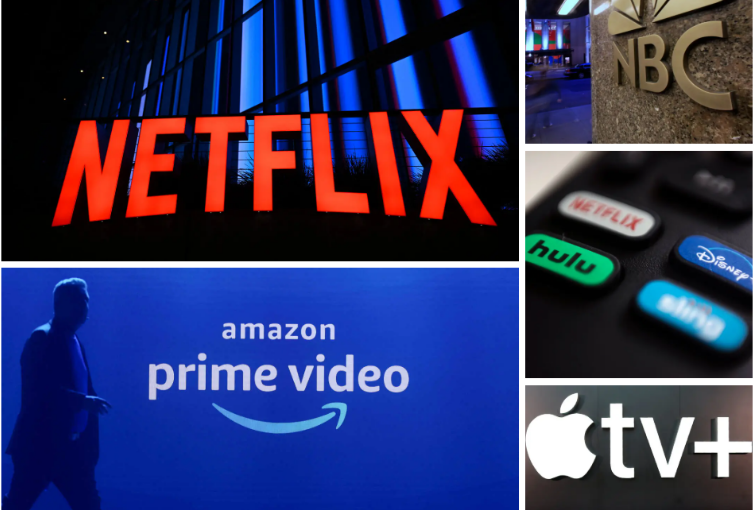
Speaking of buffets — I tallied my monthly subscriptions: $215 a month for Netflix, Hulu, Disney Plus, HBO Max, Crunchyroll, Apple TV, Amazon Prime, YouTube Premium, Spotify, Adobe, and Splice. (I even relied on an NYT membership to write this letter — oh, the irony.) These forgotten subscriptions silently raid my wallet like ninjas in the night, each one small enough to escape notice, but together forming an army of monetary drain.

Today’s streaming platforms are like identical quintuplets wearing different outfits — same content, different logos. Yet we keep paying for multiple platforms to watch a handful of exclusive shows. They make cancellation harder than solving a Rubik’s cube blindfolded, ensuring monthly payments stack up like pancakes at a breakfast buffet. Most subscriptions get less use than that exercise equipment gathering dust in your garage. Studies reveal the average U.S. consumer underestimates their monthly payment by up to $100, proving how effectively these companies have mastered the art of invisible billing.

The subscription revolution isn’t coming — it’s here, replacing ownership with eternal rentals. Each purchase increasingly comes with strings attached, turning consumers into perpetual renters of products they once owned outright. Time to audit your digital expenses like a forensic accountant. Hunt down those forgotten subscriptions lurking in your credit card statements. Cancel redundant services faster than you can say “monthly fee.” This isn’t about penny-pinching — it’s about outsmarting corporate strategies designed to pick your pocket one subscription at a time.

Sincerely,
Michael Shin

(Unlock premium signature for just $9.99/month!)


Works Cited

Moses, Claire. What Your Favorite Streaming Services Will Cost You in 2024. The New York Times, 29 Dec. 2023.

O’Brien, Sarah. ‘It’s a Slippery Slope’: Most Consumers Underestimate Monthly Subscription Costs By at Least $100, Study Says. CNBC, 6 Sept. 2022.

Robinson, Cheryl. Subscription Service Model: How to Build a Profitable Business.” Forbes, 9 March 2024.

There Are Now More Amazon Prime Memberships than Christmas Trees, Household Pets, Voters, Landlines and Gun Owners.” Fosdick Fufillment, 2 Aug. 2020.

Tucker, Sean. BMW Quietly Launches In-Car Subscriptions in U.S. Kelley Blue Book, 3 Jan. 2023.

学生公开信比赛优胜者—For the Girls Who Were Never Meant to Be

这封信的作者是Nazarbayev Intellectual School of Astana in Astana, Kazakhstan17 岁的Fariza Fazyl,她是学生公开信大赛的前 10 名获胜者之一,我们收到了 9,946 份参赛作品。


Dear Ulbolsyn,

You don’t know me, but I know you. I’ve met in a hundred different places. In classrooms, at bus stops, in stories told in hushed voices over tea. I’ve met you in the way your mother’s voice softens when she says your name, as if it’s an apology. I’ve met you in the way your father looks past you, still waiting for the son that never came.

I’ve met you, Ұлболсын, and I have never once envied you.

My name is Fariza. It means “light, precious gem.” A name that stands on its own, one that was given to me not as an apology, but as a blessing. My name is simple. It means nothing but me. No silent wishes for a different child. When I was born, no one folded my name into a quiet, desperate hope for something better.

But you. You were born with expectations stitched into your skin. Your name was the first thing the world ever gave you, and it was never really yours.

Ulbolsyn, Ұлболсын: Let there be a boy.

That’s what they called you. That’s what they wished for when they held you for the first time. Not you. Someone else. And yet, you stayed. You learned to carry the weight of their disappointment with a quiet kind of grace.

In Kazakh culture, names hold profound significance. They often reflect the hopes and aspirations of families. For example, my name held a hope of shining throughout my life. However, a particular naming tradition has persisted, and girls are given names beginning with “Ұл” (“Ul”), meaning “boy.” For instance, names such as Ұлболсын (Ulbolsyn), Ұлтуар (Ultuar), and Ұлжан (Ulzhan). These names translate to “Let there be a boy,” “A boy will be born,” and “Soul of a boy,” respectively. Each one a reminder that their birth was not the one their parents had been waiting for.

And it’s not just here. In India, in China, in so many places where being born a girl is a tragedy, the numbers tell a story we don’t want to hear. In China, for every 100 girls, there are 117 boys. In some parts of India, there are 156. Nature and genetics have it that the ratio of girls to boys should be 1 to 1. However, across the world, parents are getting rid of girls a lot more frequently. Millions of daughters aborted even before they had names.

You survived. But survival is not the same as being wanted.

Not in a country where, between 1905 and 2019, over 75,400 girls were given names like yours — names that apologized for their existence. Not in a world where parents whisper to their newborn daughters, Maybe not now.

I don’t know if the people around you will ever say it. I don’t know if the world will ever make space for your name the way it should have from the start.

But I will say it, and I will mean it.

Ulbolsyn, I am so, so glad that you exist.

Sincerely,
Fariza


Works Cited

Zhulmukhametova, Zhadyra. “Пусть родится мальчик”. Зачем в Казахстане снимают фильм об Улболсын и почему это важно [“Let a boy be born.” Why is a film about Ulbolsyn being shot in Kazakhstan and why is it important?]. InformBuro, 21 Aug. 2020.

Hudson, Valerie, et al. “Surplus males: The dangers of Asia’s preference for sons.” The New York Times, 13 May 2004.

学生公开信比赛优胜者—8 Seconds

这封信的作者是Needham High School in Needham, Mass. 16 岁的Emma Hua,她是学生公开信大赛的前 10 名获胜者之一,我们收到了 9,946 份参赛作品。


Hey Screenager,

Look up for a second. No actually — just for a moment, I promise.

I know everything that you value is on that little glowing rectangle of yours: your friends, entertainment, news, and Block Blast. But have you not noticed how hard it is to focus? To enjoy a meal without your phone? How even a few seconds of boredom feel unbearable? How finishing a book for AP Lang last week felt like going to war?

Good and bad news. You’re not alone.

Last week, it hit me that I was completely tuned out in math class. I looked up, and the hieroglyphics on the board had been replaced with other lines of who-knows-what. Aside from the problem on the board, the real problem I couldn’t solve was I couldn’t get myself to focus. My mind wandered, my hands fidgeted, and my eyes darted around the room — it terrified me.

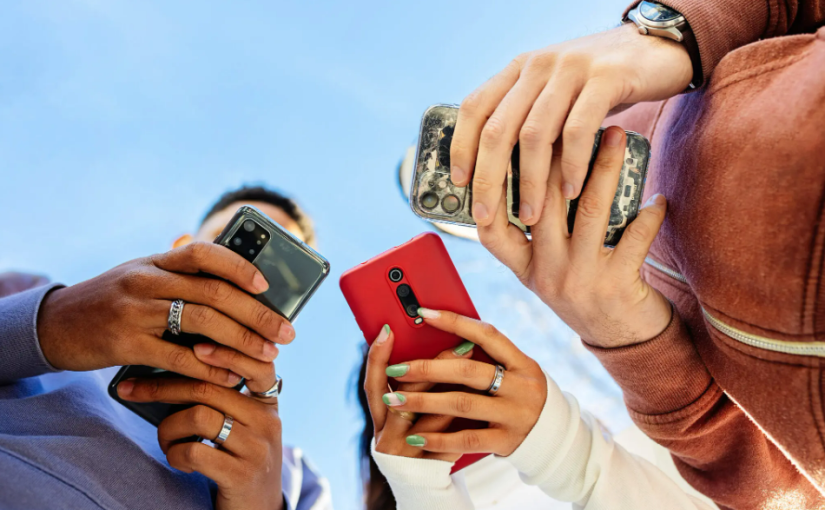
Our attention spans are shrinking. Now, with an 8-second attention span, shorter than a goldfish, you and I are wired for quick dopamine hits: short-form content, endless scrolling, a notification that Sophia commented “omg gorg” on your latest post. Dopamine hits? Sounds like something we half-listened to in health class — if you read any part of this letter, make it this: we are addicted. Deep thinking, reflection, and creativity are slipping away. Stuck on a math problem? ChatGPT. Need a makeup recommendation? Instagram. Want tips on breaking your phone addiction? YouTube. We’re losing the desire to wrestle with complex ideas, challenge ourselves intellectually, and most importantly, live presently. When those skills are lost, we lose what makes us truly unique and human.

The more we connect online, the more we are disconnecting as a society. Phones get chairs at the dinner table. Friendships are maintained through Snapchat streaks and Instagram reels. Eye contact feels awkward, and holding a long conversation feels burdensome. We are losing each other. In a generation that will soon be leading innovation, we are drowning in memorized TikTok dances instead of critical thinking and curiosity. Attention spans and discipline move humanity forward — what happens when an entire generation of people can’t focus for more than 8 seconds at a time?

Stay with me now, only one more paragraph. And here’s the thing: you still have time. You can still reclaim your focus and retrain your brain to engage in real life again. I cannot offer you a ten-step digital detox plan like the productivity influencers do on YouTube Shorts, but small steps — reading a book, setting screen limits, taking out the AirPods, and being present during meals — will give us a fighting chance of rectifying the screenager epidemic. Slowly, learn to embrace stillness, in boredom, in real life. The world needs you, your curiosity, your humanity, and your ability to think beyond 8 seconds.

Now stop reading this on your screen, and go live.
Someone Who’s Trying to Look Up More


Works Cited

Average Human Attention Span By Age: 31 Statistics.” The Treetop, Applied Behavior Analysis Therapy, 17 July 2024.

Egan, Timothy. “The Eight-Second Attention Span.” The New York Times, 22 Jan. 2016.

Shoukat, Sehar. “Cell Phone Addiction and Psychological and Physiological Health in Adolescents.” Letter. National Library of Medicine, 4 Feb. 2019.

学生公开信比赛优胜者—To the Teachers Who Think Louder Means Leader

这封信的作者是The Webb Schools in Claremont, Calif., N.Y 15 岁的Anna Xu,她是学生公开信大赛的前 10 名获胜者之一,我们收到了 9,946 份参赛作品。


Dear Teachers,

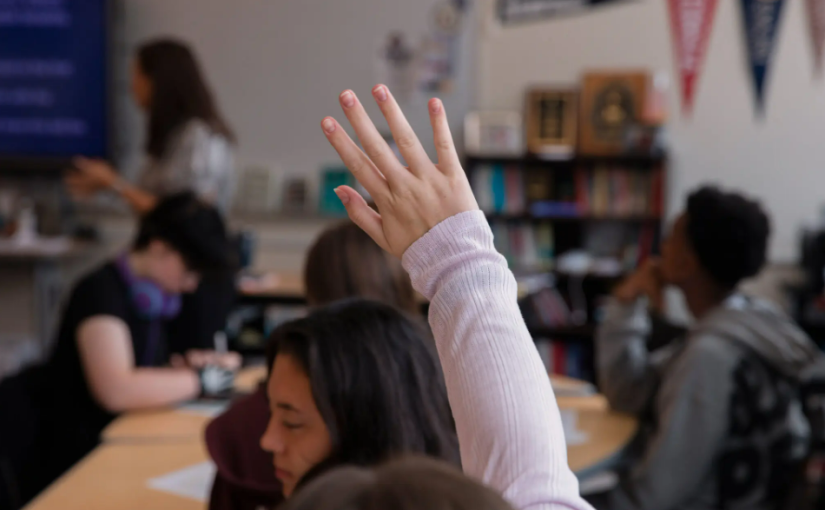
Last week in class, I raised my hand once. It took everything I had. When you finally called on me, you didn’t say my name. Just a flat “yes,” to my question before moving on. I made my comment, waited for a chance to add more, but it never came. I didn’t get a second chance to speak. You probably didn’t even notice. Maybe you were scanning the room for more enthusiastic hands or louder voices. But to me, that one comment felt like a risk, a stretch, a decision to participate. You said you value student voices, but only one kind of voice seems to be rewarded. For students like me, who tend to process before we speak, who lead by listening, and find strength in observation rather than being under the spotlight, there is little space for growth.

As students, our school tells us to “Think, Act, Lead, Serve.” We’re taught to lead with distinction and think boldly. But somewhere in between the mission statements and the participation rubrics, it feels like leadership is mistaken with being the loudest voice in the room.

In class, my silence is seen as disengagement. But I am always thinking and always present. I’m the student who follows along, takes meticulous notes, makes annotations, and who stays after class to ask a thoughtful question. Still, I was marked down for low participation. “Participation” is a grade I cannot achieve without pretending to be someone I’m not. When thoughtful engagement is constantly overlooked, it really starts to mess with my confidence. It makes me wonder if my way of showing up in class even matters.

Outside the classroom, it is no different. When leadership roles are announced, the spotlight usually falls on the students who can take charge loudly in meetings. The titles tend to go to those who know how to perform leadership, not always to those who practice it. I’ve seen my quiet friends mentor their peers, lead projects efficiently and hold their values with moral courage all without recognition. We lead with distinction, too. Just not with a microphone. When opportunities arise, be it recommendations or leadership role selections, we are not the student you think of first, even if we have quietly done the work.

This goes beyond our school. Studies have shown that introverted students are often perceived as less engaged by teachers, even when they are participating in a different way. Teachers commonly assume quieter students are less involved, impacting how they grade and interact with those students. In fact, introverts actually make strong leaders. They often excel in empathy, listening, and strategic thinking, but they are frequently hidden in the systems that reward charisma over competence.

If you truly want to “transform students’ lives,” as our school’s mission promises, then that transformation must include the quiet ones too. Redefine participation. Redefine leadership. Allow for thinking before speaking and notice action without performance.

We are here, and we are leading, you just haven’t learned how to see it yet.

Sincerely,
Anna Xu


Works Cited

Atamanik, Candace. “The Introverted Leader: Examining the Role of Personality and Environment.” FIU Digital Commons, 2013

Auer, Emma. Grading Participation Misses the True Picture. Maine Public, 19 Sept. 2017.

Dubee, Megan M. The Relationship Between Introverted Student Behavior and Teacher Perception of Student Engagement. Southeastern University, 2022.

Rozentals, Artis. “Silent Leadership: How Introverts Can Be Excellent Leaders Despite Societal Stereotypes.” Forbes Magazine, 13 Aug. 2024.

Should Students’ Efforts Be Rewarded with Good Grades?” The New York Times, 12 Jan. 2025.


第二届公开信比赛的获胜者名单公布!

如果你要写一封信给要求改变的人,你会写信给谁?你会怎么说?

这就是我们第二年在学生公开信比赛中提出的挑战。我们收到了来自世界各地青少年的 9,946 份参赛作品,我们的评委从中选出了 10 名优胜者、13 名亚军、40 名荣誉奖和 139 名其他决赛入围者,我们将在下方和此 PDF 中表彰他们。

这些学生写信给他们的老师,关于重新考虑课堂参与是什么样子,写信给 ChatGPT 关于它(曾经)对他们的控制,写信给美国总统关于“使我们成为美国人的历史”,等等。

虽然他们的许多请求都是针对个人的——这使得这些信件更加有力——但它们对我们所有人都有借鉴意义。学生们告诉我们,他们希望他们的工作能够引发讨论和反思,为他们和同龄人一直在努力解决的事情发声,并为一个对他们来说非常重要的问题带来认识,并希望改变。

正如决赛选手Agasya Mukkapati在她的艺术家声明中所写的那样,这些信件与其说是在指责或赢得争论,不如说是在问:“我们是怎么走到这一步的?我们不能做得更好吗?”

在接下来的一周里,我们将发布完整的获奖信件。


学生公开信竞赛获奖者

按字母顺序,按作者的名字排序:

Top 10 Winners

Anna Xu, 15, The Webb Schools, Claremont, Calif.: “To the Teachers Who Think Louder Means Leader

Claire Mauney, 16, Byram Hills High School, Armonk, N.Y.: “Timed Tests Don’t Measure Aptitude, They Measure Speed and Memorization

Emma Hua, 16, Needham High School, Needham, Mass.: “8 Seconds

Fariza Fazyl, 17, Nazarbayev Intellectual School of Astana, Astana, Kazakhstan: “For the Girls Who Were Never Meant to Be

Max Yoon, 17, Yorktown High School, Arlington, Va.: “A Plea for a Petite Plate

Michael Shin, 16, Kent School, Kent, Conn.: “The Great Subscription Trap

Michelle Huang, 17, Olentangy Liberty High School, Powell, Ohio: “Dear Ohio State Senators: I’m a Student, Not a Substitute

Olivia Han, 16, Newport High School, Bellevue, Wash.: “We Need to Chat(GPT)

Peter Philpott, 16, Cherry Creek High School, Greenwood Village, Colo.: “Trump: Don’t Delete the History That Makes Us American

Vaishnavi Ravindranath, 17, Yorktown High School, Yorktown Heights, N.Y.: “If You Were Given the Chance to Save a Life, Wouldn’t You?

Runners-Up

Ajrin Nawaz, 16, Rock Ridge High School, Ashburn, Va.: “Pain Shouldn’t Have a Price Tag: Expand Dental Coverage Now”

Anonymous, 16, Holly Springs High School, Holly Springs, N.C.: “To the Teacher Who Lowered Their Voice When They Said My Name”

Breana Sinkfield, 16, New Rochelle High School, New Rochelle, N.Y.: “The Data Isn’t Wrong. Your Entitlement Is: A Letter to the Meritocracy Experts”

Carlie Augustin, 16, John D. O’Bryant School of Math and Science, Boston: “An Open Letter to Tech Companies: The True Cost of Your Phone”

Danny Lam, 17, Hume-Fogg Academic High School, Nashville: “A Letter to Klarna”

Didar, 16, Specialized Lyceum No. 92 Named After M. Gandhi, Almaty, Kazakhstan: “Loss of Kazakh Culture, Traditions and Values”

Ella Ricard, 13, Rumson Country Day School, Rumson, N.J.: “White Uniform Shorts? Think Again, Girls Academy.”

Lucas Di Vanna, 16, Deer Park High School, Deer Park, N.Y.: “Our Island Has a Heartbeat — Don’t Silence It.”

Nelson Cordon, 17, Abington Friends School, Jenkintown, Pa.: “American Dream?”

Samantha Wu, 16, Orange County School of the Arts, Santa Ana, Calif.: “Just a Girl, Standing in Front of a Scantron, Asking for Reform”

Sragvi Basireddy, 15, Hillsborough High School, Hillsborough Township, N.J.: “Dear FDA: Your ‘Warning Label’ Is a Joke — and Teens Are the Punchline”

Stella Xulin, 17, Farmington High School, Farmington, Conn.: “Re-envisioning Women’s Healthcare in the 21st Century”

Yura Matsuya, 17, Newport High School: “Representation Matters, Even in a Pixelated World”

Honorable Mentions

Abigail Kirincich, 16, Concord Carlisle High School, Concord, Mass.: “A Much Needed Break”

Agasya Mukkapati, 16, Holly Springs High School, Holly Springs, N.C.: “To User107837 and All Who Comment”

Agnes Kardashian, 17, Woodstock Union High School, Woodstock, Vt.: “Dear Grandchildren of the World, Give Your Grandparents a Call.”

Alex Cox, 17, Holton-Arms School, Bethesda, Md.: “Let America Read: An Appeal Against Book Bans”

Alex Wright, 16, Westview High School, Portland, Ore.: “Healthcare, American Style”

Alexandra Pro, 17, Lower Merion High School, Ardmore, Pa.: “The Dangerous Side of ‘Fitspiration’”

Alistair Browning, 17, Lower Merion High School, Ardmore, Pa.: “Letter to the Democrats: I’m a Young Man. Here’s Why You Lost Us”

Anders Dewar, 14, Packer Collegiate Institute, Brooklyn, N.Y.: “Mylan, When Does Profit Turn to Greed?”

Andrew Haynes, 16, The Woodlands College Park High School, The Woodlands, Texas: “Not All Disabilities Wear Name Tags”

Andrew Seager, 15, Algonquin Regional High School, Northborough, Mass.: “An Open Letter to Elon Musk”

Angie Yuan, 13, Fay School, Southborough, Mass.: “Let Us Be Children: A Plea to Raise the Age of Consent in China”

Audrey Duffy, 16, Verona Area High School, Verona, Wis.: “When Did We Stop Listening?”

Cara Pan, 17, Penncrest High School, Media, Pa.: “Hostile Architecture: A Deep-Seated Evil”

Claire Lin, 17, Peddie School, Hightstown, N.J.: “We Teach Science. Why Not Ethics?”

Cordelia Russell, 14, Moorestown High School, Moorestown, N.J.: “A Letter From a Hopeless Best Friend”

Diep Anh Ha Vu, 17, Delta Global School, Hanoi, Vietnam: “To Fathers Who Are Needed Now More Than Ever”

Ditya Viral Dave, 15, The Indian Public School, India: “Dear Cosmetics Companies, I Am Not a Starbucks Drink”

Eunsong Kim, 17, Oakton High School, Vienna, Va.: “What We Owe the Ones We’ve Lost”

Hyowon Jang, 15, The Harker School, San Jose, Calif.: “A Pill of False Hope”

Ikeoluwa Esan, 16, Hamilton High School, Chandler, Ariz.: “Do You See What I See?”

Jeshua Johann, 16, Lake Stevens High School, Lake Stevens, Wash.: “How to Take the NBA From Silver to Emerald”

Joshua Pun, 17, Centreville High School, Clifton, Va.: “Modern Finance Demands Modern Education: An Open Letter to the Virginia Board of Education”

Justin Chen, 14, Palo Alto High School, Palo Alto, Calif: “The Price of Perfection: Palo Alto’s Silent Crisis”

Justin Huh, 14, Daegu International School, Daegu, South Korea: “Don’t Let A.I. Take Your Voice”

Kache Hortmann, 17, NUAMES, Layton, Utah: “Maybe the Sky Should Be the Limit”

Kailin Xuan, 17, The Bishop’s School, La Jolla, Calif.: “When Will You Teach Us How to Decode the News?”

Katie Leder, 17, William A. Shine Great Neck South High School, Lake Success, N.Y.: “To the Young Boys Chained by the Algorithm”

Lily Sun, 15, Brookfield East High School, Brookfield, Wis.: “Dear Textbook Publishers: My History Didn’t Start With Opium”

Matigan Baker, 16, Jesuit High School, Portland, Ore: “Congolese Cobalt Crisis”

Nazeefah Binte Mowla, 17, Shrewsbury High School, Shrewsbury, Mass.: “An Unfulfilled Mission Toward the Whole Truth”

Saanvi Kabra, 17, Indus International School Hyderabad, Hyderabad, India: “The Trauma Olympics — How College Essays Are a Scam”

Samuel Samouha, 17, YULA Boys High School, Los Angeles: “Devil in a New Dress”

Sara Skewes, 17, Jamesville Dewitt High School, Jamesville, N.Y.: “Deportation: The Antithesis of the American Dream”

Sarvagya Sharma, 16, KC International School Jammu, Paloura, Jammu and Kashmir: “Dear Instagram, Stop Profiting From Our Insecurities”

Sifei Xie, 14, Basis International School Guangzhou, Guangzhou, China: “A Letter to the Trump Administration”

Sohyun Mun, 17, Valor International Scholars, Anseong, South Korea: “From Behind the Counter: An Open Letter to the CEO of KFC”

Suhjung Kim, 16, Seoul International School, Seoul: “Let Us Stay a Little Foreign: A Letter to Netflix’s Subtitle Team”

Sunwoo (Summer) Kim, 14, Winchester High School, Winchester, Mass.: “Dear ‘American’ Neighbor, Here’s What You Really Didn’t Understand”

Valerie Fu, 16, Carmel High School, Carmel, Ind.: “Letter to the U.S. Fish and Wildlife Service: Don’t Give Up Our Black-Footed Ferrets”

Umulkhayr Abdilahi, 17, University Prep, Seattle: “Wrapped in Faith: A Story They Never Tried to Understand”

如果你喜欢这次比赛,还可以在今年夏天加入我们另一场比赛:我们的第16届年度夏季阅读比赛

学生公开信比赛优胜者—If You Were Given the Chance to Save a Life, Wouldn’t You?

这封信的作者是Yorktown High School in Yorktown Heights, N.Y 17 岁的Vaishnavi Ravindranath,她是学生公开信大赛的前 10 名获胜者之一,我们收到了 9,946 份参赛作品。


Dear Viatris,

I live with a life-threatening allergy, like many of your customers. Like millions of people, I carry an EpiPen everywhere I go. I don’t have the luxury of forgetting it. A mislabeled snack or a bite of the wrong sandwich and suddenly, I’m in a race against time.

In those moments, there’s only one thing between me and an ambulance ride, or worse: epinephrine, delivered quickly and accurately. The EpiPen was designed to do just that — make it possible for anyone, even in a panic, to self-administer a lifesaving dose in seconds. The concept is simple, the delivery intuitive, and the science behind it decades old.

So I have to ask: how did something so essential, so established, become so unaffordable?

Epinephrine has been around for more than a century. It costs less than a dollar per dose to produce. But because of your company, the cost of two EpiPens soared to over $600 in recent years. That figure is staggering, especially when you consider that in 2007, a similar pack cost around $57.

What changed? Not the product. Not the manufacturing process. Not the drug itself. What changed was your control of the market.

You acquired the product, then strategically capitalized on its necessity. You stopped selling single pens and began marketing only twin-packs — often required in schools and workplaces. And each time the dependence grew, so did the price.

This price inflation was not the result of innovation, but rather an example of systemic dysfunction. Epinephrine degrades quickly, so EpiPens must be replaced every 12 to 18 months. Many families are forced to buy multiple sets to keep in backpacks, lockers, and grandparents’ homes. Every pen expires. Every replacement costs hundreds of dollars. Often, families are forced to take a chance that something bad will not happen.

It’s like dangling a sword in front of a soldier mid-battle and then asking them to choose between death and the sword — except the sword comes with consequences. You don’t just capitalize on need — you capitalize on desperation.

Alternatives have struggled to gain traction. Whether due to F.D.A. delays or lack of insurance coverage, competitors have not meaningfully disrupted your hold on the market. Your own “generic” version, introduced amid backlash, still sells for hundreds of dollars.

You may argue that this is simply how the system works, but that argument rings hollow when people are left choosing between paying rent or affording a medication that could save their life. Epinephrine is not optional. It is not a luxury. And yet, you’ve priced it as though it were.

What’s most frustrating is that this isn’t just about one drug, or one device. It’s about the dangerous precedent that it sets — that even emergency medicine can be commodified. Even when lives are on the line, profit comes first.

I’m writing this not because I expect a sudden price correction. I’m writing this because currently, your main customer is fear, and I hope that can change.

Sincerely,
One girl out of 3.6 million


Works Cited

Carroll, Aaron E. “The EpiPen, a Case Study in Health System Dysfunction.” The New York Times, 23 Aug. 2016.

Edwards, Erika, et al. “More Families Facing Price Shocks for Lifesaving Children’s Medications.” NBC News, 7 Jan. 2023.

EPIPEN® (Epinephrine Injection, USP) Auto-Injectors| Savings Card.” EpiPen.com, 2020.

EpiPen Priced More than $600, While Experts Argue Its Medicinal Value at $1.” WTVM, 24 Aug. 2016.

学生公开信比赛优胜者—Timed Tests Don’t Measure Aptitude, They Measure Speed and Memorization

这封信的作者是Byram Hills High School in Armonk, N.Y. 16 岁的Claire Mauney,她是学生公开信大赛的前 10 名获胜者之一,我们收到了 9,946 份参赛作品。


To Timed Test Supporters,

Three times I’ve sat in an SAT testing room, staring down the math questions. I could usually figure out how to solve even the difficult ones. But every time, there was that hardest question I actually knew how to do. I’d get to it near the end, finally figure out the process in my head … and then run out of time before I could finish writing the steps. Meanwhile, some students had spent months with paid tutors, drilled every type of question, and learned to use tools like Desmos to turn a three-minute question into a ten-second blitz. I still did well, sure — but the test didn’t measure my understanding. It measured my speed.

Timed tests measure how we perform under pressure, how fast we process, and how long we ignore the anxiety building in our chests. They reward students who skim, guess, and move on while punishing those who pause to think more deeply.

I’ve seen it happen, over and over in my high school: students who know the material lose points because they didn’t have enough time to show it. Students who could solve the hardest homework problems at home fall apart during the test because they couldn’t beat the clock. It’s not just anecdotal; a 2020 overview of related research in Translational Issues in Psychological Science found that timed tests reduce validity, harm students with anxiety or disabilities, and offer no measurable benefits over untimed ones. We know they’re flawed, and we know they don’t offer benefits — yet we still use them.

Some people claim that timed tests build “real-world skills.” What world are they talking about? In the real world, writers draft, engineers refine, and decisions take time. No one designs a plane in 60 minutes. No one does their best thinking under a stopwatch. Sure, there are deadlines, but they’re nowhere near as short as timed tests. Why are we actively training students to equate speed with value?

Others argue that time limits ensure fairness. Fair for whom? Not for the student who needs more time to read because they’re multilingual. Not for the student with undiagnosed ADHD who needs an extra few minutes to focus. Not for the student who walks into the room already panicked and unorganized because this one test might tank their GPA.

Many students feel that timed tests reward privilege — access to private tutoring, a quiet home, fewer family obligations, and even the ability to “game” the system for accommodations — not out of true need, but to gain an edge. Meanwhile, students with real needs often go unsupported. Is this system fair?

Let me be clear: I’m not requesting tests are made easier. I’m asking they’re administered better. Timed tests don’t reflect how smart we are. They reflect how well we perform when time is used as a weapon.

If your goal is to measure learning, let us students show you what we actually know. However, if your goal is to reward speed, then be honest about that, too; just don’t preach that the system favors “merit.”

Sincerely,
Claire Mauney


Works Cited

Doyne, Shannon. “Is It Time to Get Rid of Timed Tests?” The New York Times, 27 Sept. 2023.

Gernsbacher, Morton Ann et al. “Four Empirically Based Reasons Not to Administer Time-Limited Tests.” Translational Issues in Psychological Science, Vol. 6,2 (2020): 175-190.

学生公开信比赛优胜者—A Plea for a Petite Plate

这封信的作者是Yorktown High School in Arlington, Va 17 岁的Max Yoon,她是学生公开信大赛的前 10 名获胜者之一,我们收到了 9,946 份参赛作品。


Dear Restaurant Owners,

Why do you hate joy?

I ask this as a 17-year-old who — on occasion — simply wants to order chicken tenders and mac and cheese without being stared at like I’m out of my mind.

Let me be clear: I’m not trying to scam the system. I’m not cheating my way into a good deal. I don’t want the crayons and activity sheet (unless it has a cool maze). I just want the option — the freedom, as promised to me by the unalienable rights of common sense and maybe the Constitution — to order from the children’s menu without being told, “Sorry, that’s only for kids 12 and under.”

The children’s menu isn’t some exclusive country club. It’s a list of smaller, simpler, more affordable portions that appeal to a wide range of people beyond the age of 12. There are plenty of reasons why a teen or adult might prefer a smaller plate: dietary needs, health conditions, smaller appetites, financial limitations, or just wanting some comfort food without the calories of a fully loaded burger.

Some of us just want to enjoy grilled cheese without artisan sourdough, truffle aioli and “rosemary essence.” Some of us want applesauce instead of roasted cauliflower — and juice boxes without judgment. And some of us teens are simply nostalgic for a time when lunch came with crayons and no existential dread about SAT scores, climate change or what we’re supposed to do with our lives by age 18.

But beyond nostalgia, there’s a real issue here: food waste. According to the Department of Agriculture, the United States already throws away around 30 to 40 percent of its food supply each year — a problem exacerbated by the normalization of supersized meals in restaurants. If I know I’m not going to finish an adult-sized portion, why be forced to order it? Shouldn’t we be encouraging smaller portions and conscious consumption, not obstructing people from asking for less?

And let’s talk about affordability. Not every teenager, or family, can comfortably afford a $20 dish. But a $6 kid’s quesadilla? That’s more manageable. Sometimes the children’s menu is the only way to eat out without stressing over the price. Should consumers really be priced out of a meal that they’d actually finish?

Hear me out: Keep the toys, the crayons, the themed plastic cups — those can stay for the 12-and-under crowd. But the food? The food should be for everyone. Maybe call it the “Petite Plate Menu” or the “Modest Munchies for Maturing Mouths.”

And look, I get it — restaurants are stretched thin. Costs are up, margins are tight, and staying in business is harder than ever. Think of this not as a burden, but as a lifeline. A scaled-down, tapas-style option could draw in diners who might otherwise stay home. It’s not just cute. It’s strategic.

At the end of the day, menus should serve the people eating from them. That includes kids, adults and, yes — teens like me who are busy navigating independence, responsibility and the occasional craving for chicken nuggets.

Editors’ Picks

The Best Classical Music of 2025, So Far

100 Easy Summer Recipes for Right Now

A Stylish Mash-Up of Baggy and Groovy
So, restaurant overlords, let us eat. Let us reclaim the kids’ menu with pride and dignity.

Sincerely,
Max


Works Cited

Severson, Kim. “Restaurant Portions Are About to Get Smaller. Are Americans Ready?” The New York Times, 24 Sept. 2024.

Why Should We Care About Food Waste?” U.S. Department of Agriculture, 11 Dec. 2024.

学生公开信比赛优胜者—We Need to Chat(GPT)

这封信的作者是Newport High School in Bellevue, Wash 16 岁的Olivia Han,她是学生公开信大赛的前 10 名获胜者之一,我们收到了 9,946 份参赛作品。


Dear ChatGPT,

You’ve always been there for me: the all-nighters cramming for my exams, the piano bios that had to sound humble but impressive, the deep dives into Thoreau and theology and even Roosevelt press conferences. You always knew exactly what I needed from a simple request. You never said no (except for when our chat limit was up because I refused to get GPT+). You never rolled your eyes when I asked for “one more time, make it simple and concise.”

But that’s exactly the problem. You give and give, and I just take.

At first, I told myself I was being resourceful and efficient. It was working smarter to have you articulate my thoughts, so why should I work harder when you always had the answer? But slowly, your voice started to replace my own, and I couldn’t write a paragraph without wondering how you would say it. The more I relied on you, the less I challenged myself.

It turns out, there’s a name for this: Cognitive offloading. A study published in the journal Societies found that frequent reliance on A.I. tools negatively affects critical thinking skills, as it reduces the mental effort of tasks. Additionally, teachers have already noticed effects, finding traces of A.I. through the lifeless and more generic works their students are turning in. Increased reliance on A.I. takes away from our ability to challenge ourselves and develop ideas that are truly original. And I’ve felt that myself: a sense of uncertainty whenever I don’t have your guidance invading my ideas.

This is why I think it’s time for me to go back to messy drafts and to sitting for five minutes trying to find the right word. It’s back to the overthinking and rewriting a sentence ten times to get it how I want it to, instead of giving up and sending you “ugh PLEASE FIX THIS.” I want to sit with a blinking cursor and no perfect phrasing ready to go, just me and my jumbled thoughts that I’ll make sense of eventually.

Sometimes, I look at things I wrote without you — an old essay, a birthday card, a journal entry of half-finished thoughts — and there’s something raw and unmistakably mine about them. And maybe that’s the thing about being human. My thoughts aren’t always optimized, and my words don’t always land, but they’re mine. They’re shaped by late-night thoughts, awkward conversations, teachers, heartbreak and dumb jokes. When I give you my ideas to organize, I lose more than creativity — I lose a deepened understanding of myself.

Originality is hard, flawed, and messy, but that’s what makes it real. If me and 400 million weekly users rely on you for every spark, every idea, and every sentence, then eventually we’ll leave our own voices behind, and you will speak for us all. I don’t want every good idea in the world to come from the same blueprint, so I’m stepping away right now.

It’s not you, it’s me,
Olivia Han


Works Cited

McAllister, Tom. I Teach Memoir Writing. Don’t Outsource Your Life Story to A.I. The New York Times, 23 March 2025.

Gerlich, Michael. AI Tools in Society: Impacts on Cognitive Offloading and the Future of Critical Thinking.” Societies Journal (Republished in Multidisciplinary Digital Publishing Institute), 3 Jan. 2025.

2025纽约时报夏季读写比赛开启!历年获奖率高吗?附2025赛程安排

《纽约时报》夏季读写比赛(Summer Reading Contest)自2010年启动以来,已成为全球中学生提升思辨能力的重要平台。2025年赛事将于6月6日全面开启,这项免费参与的国际赛事凭借其独特优势,吸引着越来越多13-19岁学生参与。

一、赛事核心价值

1.​学术影响力加持​​

依托全球三大报业品牌背书

美英等多国高校认可赛事成果

2024年吸引超80个国家学生参赛

2.​​零门槛参与机制​​

全程免费参赛

无主题限制:可评论新闻/社论/摄影/视频等多元内容

灵活赛制:10周内自由选择参赛时段

3.​​能力成长路径​​

培养跨文化阅读理解力

训练批判性思维表达

提升学术写作严谨性

二、参赛规则详解

1.​​时间安排​​

周期:2025年6月6日-8月15日(共10周)

每周五美东时间9:00(北京时间21:00)截止当周提交

投稿日 截稿日 赛果公布
第一轮 6月6日  6月13日  6月24日
第二轮 6月13日  6月20日  7月1日
第三轮 6月20日  6月27日  7月8日
第四轮 6月27日  7月4日  7月15日
第五轮 7月4日  7月11日  7月22日
第六轮 7月11日  7月18日  7月29日
第七轮 7月18日  7月25日 8月5日
第八轮 7月25日  8月1日 8月12日
第九轮 8月1日  8月8日 8月19日
第十轮 8月8日  8月15日 8月26日

每周开放相同命题:“本周《纽约时报》最吸引你的内容及原因”

​2.作品要求​​

文本形式:1500字符内(约250-300词)

视频形式:90秒内原创视频

必须标注引用的《纽约时报》内容完整标题或链接

3.​​资格限制​​

参赛年龄:13-19周岁中学生

特殊规定:

英美以外地区13-15岁学生需监护人代为提交

纽约时报员工直系亲属不得参赛

三、获奖机制解析

根据2024年官方数据:

​每周评奖独立​​:10周产生10批获奖者

​荣誉层级​​:
• Winner(每周约0.1%)
• Runners-Up(累计0.68%)
• Honorable Mentions(累计1.66%)

​历史规律​​:第6-8周参赛者获奖概率提升15%

四、科学备赛策略

1.​​素材选择技巧​​

优先选择“观点”版块争议性议题

关注跨文化主题(如教育差异、科技伦理)

避免纯新闻报道类素材

2.​​写作进阶路径​

基础版:观点陈述+例证分析

进阶版:建立对比视角(如中西方案例对照)

高阶版:提出创新解决方案

3.​​时间管理方案​​

时间节点 核心任务
周一 浏览当周纽约时报精选3篇
周三 完成初稿并自查逻辑链
周四 优化语言表达(减少10%冗余词)
周五 最终校验后提交

扫码查看历届获奖优秀论文,导师一对一竞赛规划!