By Finn Soglia, 16, Dover-Sherborn High School, Sherborn, Mass.
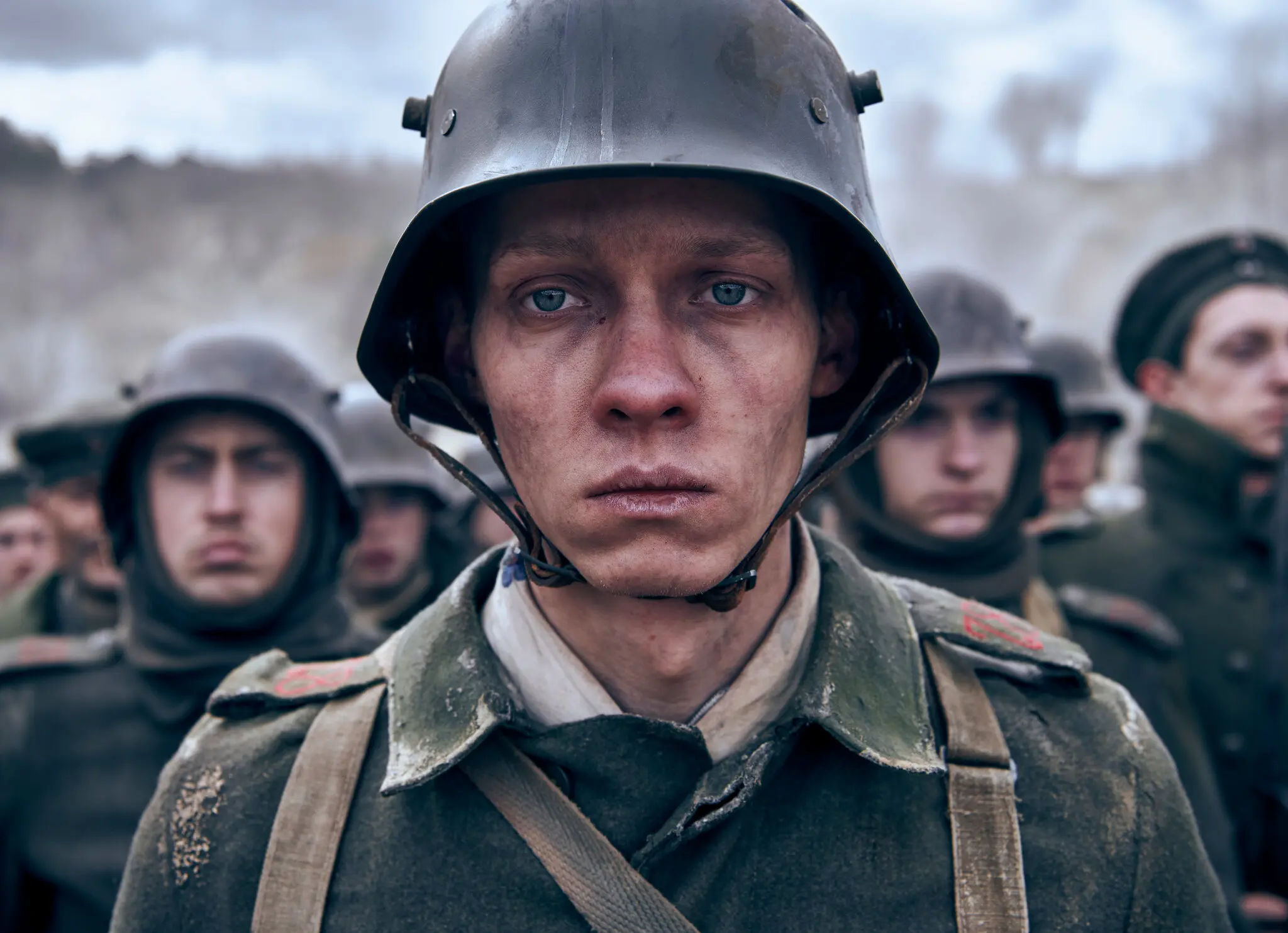
According to Finn Soglia, 16, “All Quiet on the Western Front" is one of several contemporary films that provide “necessary” and “relevant” perspectives on the nature of warfare.Credit...Reiner Bajo/Netflix
If you’re someone who enjoys historical cinema (as I do), you may find most war films to be purely exploitative or completely inaccurate. Luckily, whether to show the indiscriminateness of war’s brutality, demonstrate the horrid humanity of those who commit our world’s worst atrocities, or inadvertently expose the ideological undertones of war cinema, these three films provide necessary and contemporarily relevant perspectives on the nature of warfare.
“All Quiet on the Western Front” (2022)
No literary work portrays war’s horrors quite like “All Quiet on the Western Front,” and its 2022 film adaptation does Erich Maria Remarque’s novel the justice it deserves. Both versions follow a fictional young soldier’s slow unraveling as he faces World War I trench warfare, but the exceptional thing about them is that the soldier himself is German. Remarque’s fictionalized account of his own experiences as a German soldier reflects a startling truth — not only the virtuous side of war suffers the brutality of it. Among the fleets of ideologically-driven fanatics on the front lines are the young, traumatized and disillusioned, much like Remarque’s 17-year-old protagonist. “All Quiet on the Western Front” thus serves as more than just a testimony to the horrors of combat, but the dialectical nature of war itself as something that can destroy one’s very soul — regardless of which side they fight for.
“The Zone of Interest” (2023)
Detailing the personal and family life of Kommandant Rudolf Höss of the Auschwitz concentration camp during World War II, “The Zone of Interest” is a striking show of complicity, serving to demystify the Holocaust by portraying the Nazis against an eerily domestic backdrop. In a world where perpetrators of war appear as almost mystical figures, films like “The Zone of Interest” show us the jarring mundanity and domesticity of their daily lives. We never imagine Nazis tying their shoes or dictators taking a walk outside their compounds, since many find it terrifying to think an everyday human with shoelaces and morning walks could be a willing participant in atrocities. However, history lends us to accept horrifying facts for the sake of gaining a greater understanding of reality. The mere notion of power and security, a fervent promise that there’s some way to ‘save’ your dear nation or ideology via annihilation of its opposition, can cause an ordinary citizen like you or I to take up arms against the innocent. In the words of Voltaire, “Those who can make you believe absurdities, can make you commit atrocities.”
“Zero Dark Thirty” (2012)
While more contemporary than the first two films, this thriller-drama centers on a fictional female C.I.A. analyst and her agency’s decade-long hunt for Osama bin Laden after the tragedy of 9/11. Frankly, I don’t cherish this film as much as I do “The Zone of Interest” and “All Quiet on the Western Front.” The film almost glorifies the torture carried out by the United States during the hunt for bin Laden, downplays the involvement of the Obama administration, and also inaccurately portrays Middle-Eastern culture. For those reasons, “Zero Dark Thirty” isn’t making the list due to the film’s quality itself, but rather the implications of its flaws. In the United States and other Western nations, we generally consider the War on Terror a war of retribution, often deliberately portraying the grave mistakes we made under the guise of “This was necessary — they deserved it.” This ideology lends us to portray the most heinous acts of war as “necessary” for victory, making “Zero Dark Thirty” a necessary watch for any American or other willing to see firsthand the ideological charge in war cinema.