Hassan Alazzeh, 14, American Community School, Amman, Jordan
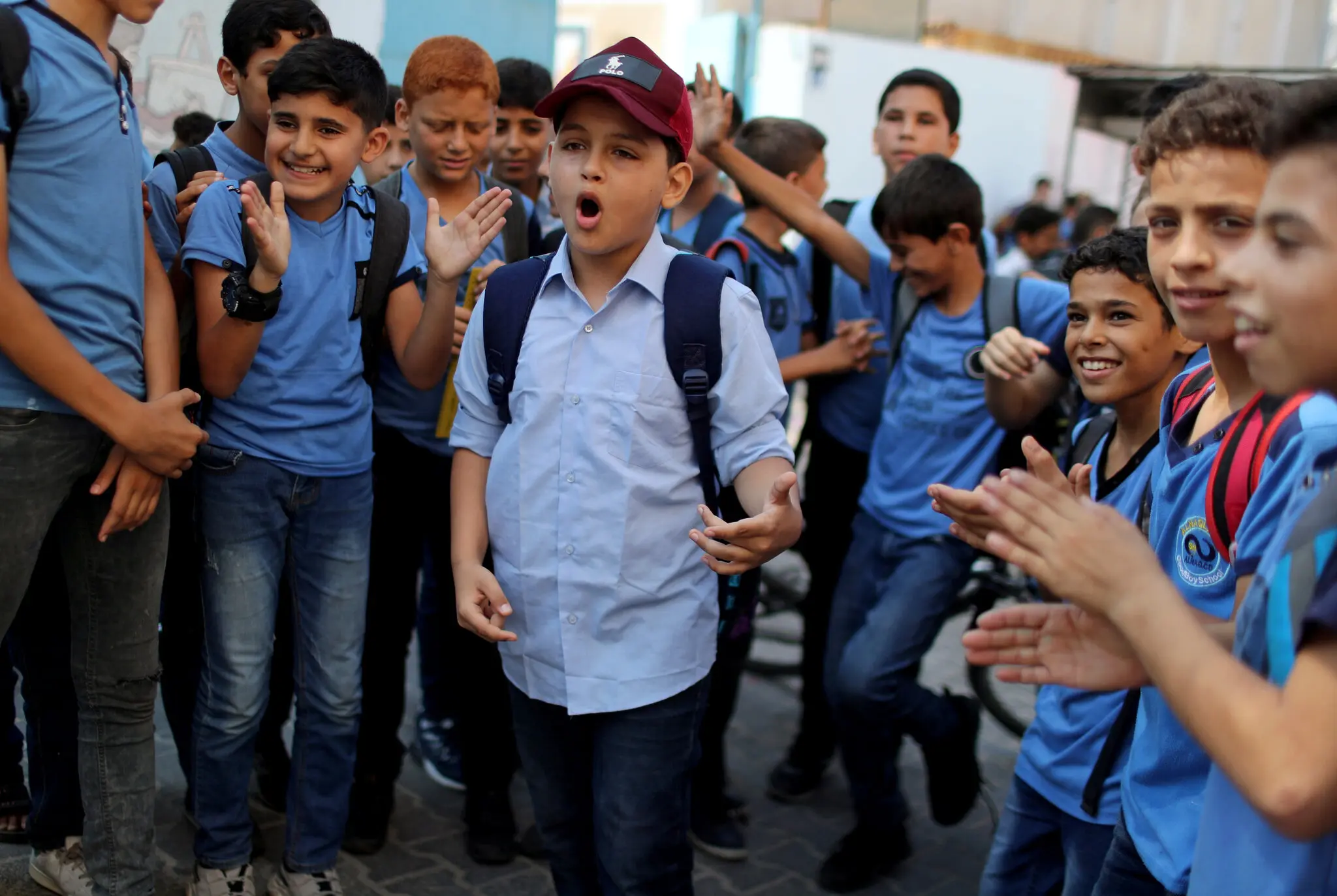
Abdel Rahman al-Shantti, 15, pictured above at 11-years-old, performs under the name MC Abdul. Hassan Alazzeh, 14, writes that the Gazan rapper uses his rhymes to “challenge us and expose us to untold stories and different perspectives.”Credit...Mohammed Salem/Reuters
You do not notice his accent right away. Perhaps you are captivated by his catchy rhymes or are simply enjoying the rhythm. Then, the vibe shifts, and you unexpectedly become aware of a line that makes you pause: “He could’ve been a scholar, he dealin’ different problems,” along with the stark revelation that a “Missile hit his home and crushed and killed his Baba.”
Baba: the Arabic word for father. The rapper? Abdel-Rahman al-Shantti, known as MC Abdul. He is Palestinian, from Gaza. Oh, and he is 15.
Suddenly, the rap is deeply political. You wonder if listening to MC Abdul makes you a sympathizer to one “side” of a conflict that is presented as having no middle ground. The short and long answers are: yes. When you listen, you are consciously making a choice to acknowledge that this Gazan teenager is a person, just like you. Educated at a United Nations school in Gaza, MC Abdul taught himself English by listening to music online, and uses rap — traditionally the poetry of the disenfranchised — to reach you.
“The Pen and the Sword” was written in September of 2023, before the horrific Oct. 7 attacks on Israel. The title, a play on the age-old adage, sets the tone for a narrative that is a call to arms, not with weapons, but with words. At the heart of the lyrics is a simple message about the importance of education and the need to defend it, for all children, everywhere.
From the first beat, MC Abdul captures our attention with his blend of traditional hip-hop and contemporary oriental soundscapes. The soft innocence of the choir of children chanting the chorus is striking against Abdul’s choppier rapping. However, what sets this song apart is not its sonic appeal, rather its message, an implicit plea to allow hope for a better tomorrow. The lyrics are peaceful, avoiding words and descriptions that might be edgier to younger listeners.
Abdul’s flow is smooth and commanding; the chorus is simple and memorable. He puts a voice to the casualties of war, an image to statistics that help us forget that each number is a person, with aspirations of playing soccer, and “meeting up by [their] lockers.”
God is invoked several times. Abdul asks, “You think Allah won’t see what you’re doing to his children?” using the Arabic term common to both Christians and Muslims of the Middle East. He reminds us, “We’re all humans in God’s eyes.”
One important role of the arts is to challenge us and expose us to untold stories and different perspectives. MC Abdul’s rap is no different. His life, “ain’t even make news in y’all city” but maybe his song will.