By Subin Kim, 15, Archbishop Mitty High School, San Jose, Calif.
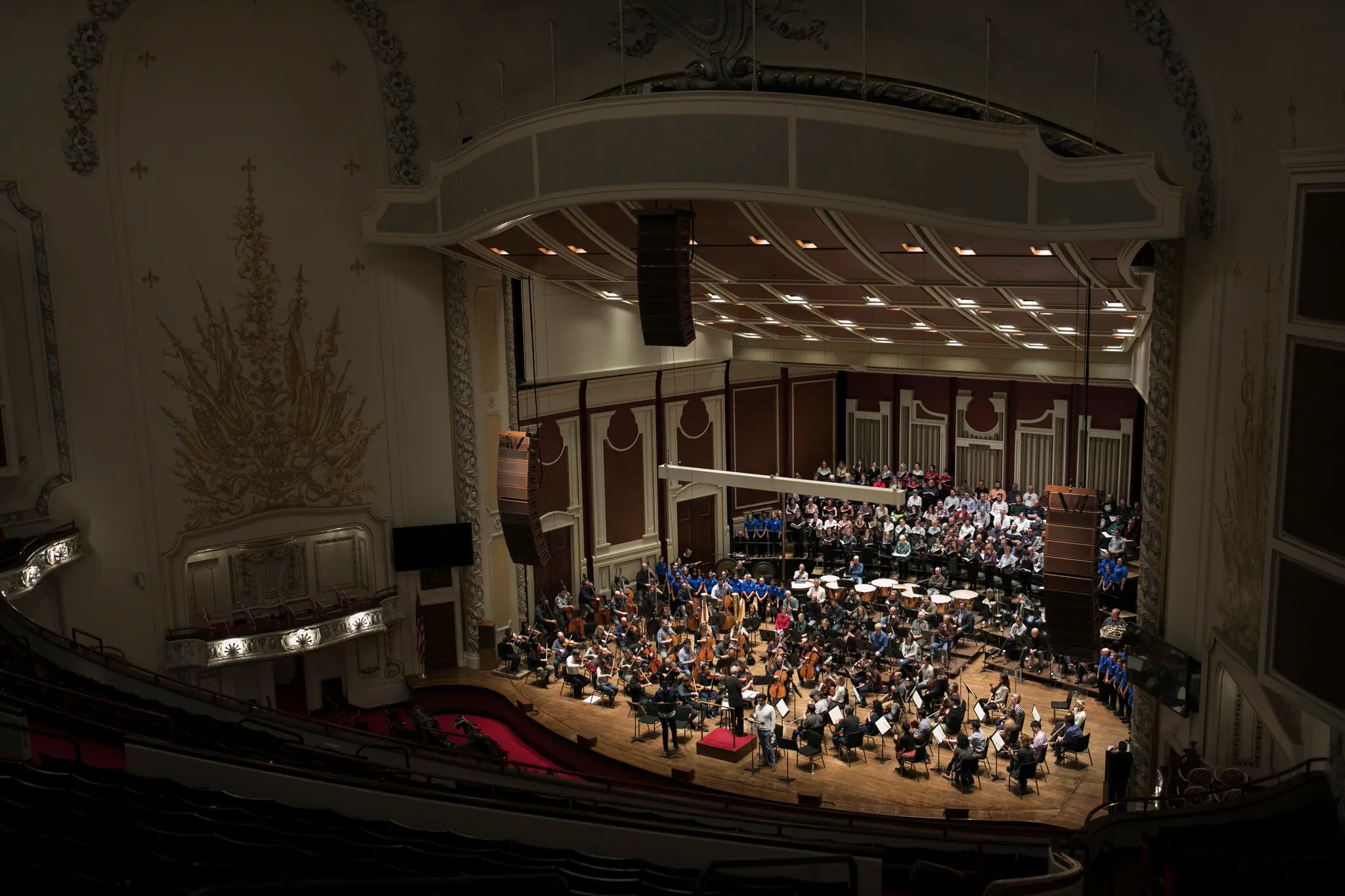
The Pittsburgh Symphony, here at their home in Heinz Hall, recently played Shostakovich’s Symphony No. 5 at Carnegie Hall. Subin Kim, 15, recommends the masterpiece as one of three that will “make you fall in love with classical music.”Credit...Maddie McGarvey for The New York Times
In a world dominated by screens, you’d probably rather doomscroll or binge-watch “Stranger Things” than sit through an hour of a symphony.
As a chronically online teenager and devout K-pop listener, I get it. But a symphony isn’t a boring, overdone performance of a dead guy’s music: It’s a heartfelt story full of twists and turns. How else can you go on an emotional roller coaster and hear a narrative — with no words?
No more falling asleep at the symphony: Here are three masterpieces to make you fall in love with classical music.
1. Tchaikovsky’s Symphony No. 4: Relatable for real
Billie Eilish isn’t the only artist who can translate her feelings into music; Tchaikovsky did it hundreds of years before. The symphony opens with a booming brass fanfare, crashing into you in a way you can’t ignore. Tchaikovsky pours his struggles with anxiety, loneliness and pressure into the symphony, making it deeply personal and relatable.
After the dramatic opening, the sweeping string lines reveal gentle, fragile woodwind solos, like your inner voice and vulnerability piercing through the chaos. Together, the melancholy yet beautiful atmosphere encourages reflection and freeing yourself from emotional burden. By the final movement, the symphony bursts into celebration: not because the struggle is gone, but because you’ve overcome it.
2. Shostakovich’s Symphony No. 5: Celebration (Protest)
When Shostakovich composed his fifth symphony, artists in the Soviet Union were expected to create music that sounded optimistic and heroic, celebrating the Stalinist regime. Deviating was dangerous. So he didn’t … but hid a message of protest.
From the first thundering note, tension and unease are rife in the atmosphere. By the final movement, the symphony sounds triumphant, the perfect tribute for the government. But listen … the trumpet’s fanfare is a little too rigid and mechanical; the strings are more aggressive than usual. Even the bright woodwinds sound shrill bordering on strained. Is it really a celebration, or is it highlighting oppression? After the haunting third movement, the ending feels more like clenching one’s teeth, revealing Shostakovich’s hidden rebellion against the government.
3. Berlioz’s Symphonie Fantastique: Relationships …
You’re not the only one with relationship struggles; Berlioz’s Symphonie Fantastique focuses on an artist consumed by love, driven mad to death by obsession with his lover. Berlioz himself suffered from mental health issues (clearly), but his symphony is a masterpiece. With a dreamy, once-upon-a-time-esque opening, the listener is transported to a waltz in the second movement, where the narrator locks eyes with a beautiful woman across the room. Love at first sight. Yet from there, the story spirals. In the very last movement, Hexensabbat translating to “Witches’ Sabbath,” the narrator imagines his own funeral. The E flat clarinet leads the way as a sharp, mocking cackle of a witch, turning a beautiful, star-struck love into something grotesque. The symphony is wild, theatrical, and utterly dramatic; it’s a passionate whirlwind much like the sensation of falling in love. And maybe that’s what it feels like to fall in love with classical music.
We value human story so highly because it’s a form of connection and a way to make sense of a chaotic world. In Tchaikovsky, you might hear your struggles: overwhelmed from pressure, completely alone and vulnerable. You’re not alone. In Shostakovich, pulling yourself together, smiling through the pain. Embrace love and chaos in Symphonie Fantastique.
That’s why these symphonies still matter in the big 2026. They aren’t relics of the past, but the timeless soundtrack of human experience.