Evelyn Kim, 18, Choate Rosemary Hall, Wallingford, Conn.
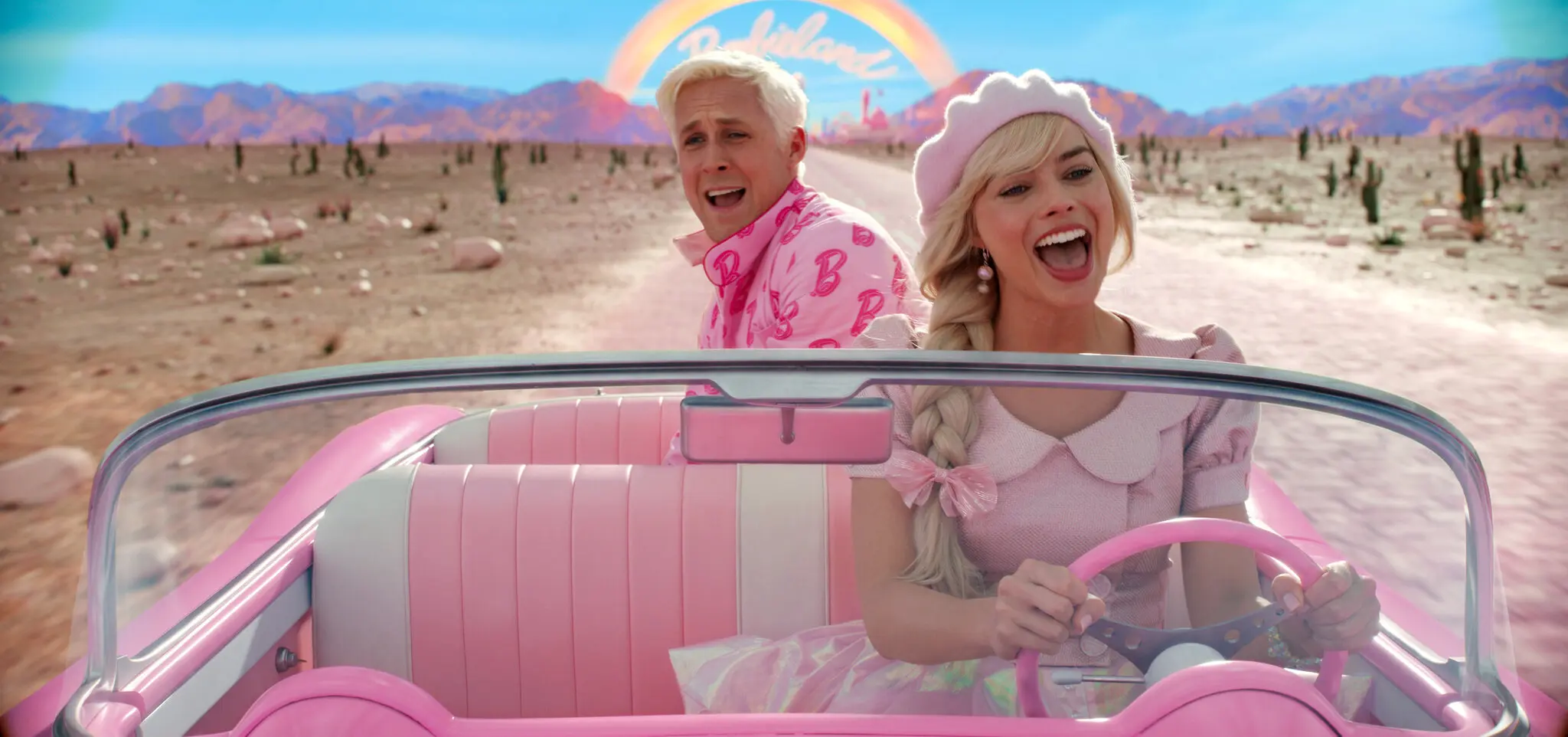
Evelyn Kim, 18, calls the blockbuster hit “Barbie" “nothing more than a two-hour Mattel advertisement.”Credit...Warner Bros.
In times of an alarming emergence of online toxic hyper-masculinity, “Barbie” descends on hot pink feathered wings as a possible savior — a gilded messenger of Hollywood. Hailed as the feminist movie that would revolutionize the definition of girlhood in popular culture, Greta Gerwig’s “Barbie” was anticipated as a film that would subvert characteristics of the superficial plastic mascot to accurately portray underrepresented difficulties of femininity. The marketing of “Barbie” curated an infallible image of a film that deviated from Hollywood’s male lead standard, embraced “fun girliness” and challenged society’s casting of women in subordinate roles, all while boasting Hollywood darling Margot Robbie.
Primarily taking place in matriarchal “Barbie Land,” the gaudily bright artificial colors of the pink plastic setting match the bubbly-pop hit artists lining the soundtrack. Though fans anticipated a deceptively superficial appearance that would give way to a darker analysis of feminism, this movie was clumsily patched together with a surface-level understanding of feminism claiming that although a patriarchy was bad, a matriarchy — even with Barbies in command — was equally bad. Robbie faces cruel teenagers in the “real world” that dare to raise real criticisms of the harmful effects the Barbie franchise has had on female beauty standards and body issues. Teary-eyed Robbie begs the audience for sympathy, saying she never meant to create these problems, and only wanted a friend, washing her hands of this guilt and allowing Mattel to curate a version of Barbie acceptable to a new generation of consumers.
Womanhood is more than being a mother or girly friends, yet “Barbie” defaults to a traditional emphasis on mothers raising daughters, completely disregarding transgender, non-heterosexual and nonwhite women’s experiences. Though America Ferrera and Ariana Greenblatt exchanged a few words in Spanish, this was nowhere near an actual portrayal of the nonwhite experience of femininity, and more of a shrug of acknowledgment in the direction of women of color.
Anticipation for “Barbie” surpassed the actual movie itself. The experience of dressing up pink to attend screenings of this movie was an invitation to anyone regardless of gender identity or budget — a refreshing way to express collective fun. As long as it was pink, it was perfect. A signal to others in the know to greet you with a bubbly “Hi, Barbie!,” “Barbie-core” was a low-stress way to connect with others, uncharacteristic of the post-quarantine world.
With “Barbie,” we were given hope for a chance at a popular depiction of genuine feminism. And for some, the simple remark “This is what the ‘Barbie’ movie was talking about” is an easily comprehensible way to call out misogyny through pop culture. And yet, to those who have not yet seen this movie — consider it nothing more than a two-hour Mattel advertisement.